
The need to understand human life, with its contradictions and uncertainties, lies at the center of Vicky Tsalamata’s practice. Working from Athens, Greece, she considers the ways society enters personal experience, influencing identity, relationships, and an individual’s sense of worth. Her art brings a critical eye to political and moral conditions, using irony and sarcasm to question the acceptance of inequality. At the same time, she remains attentive to emotional needs that persist across different eras: companionship, affection, and meaningful communication. These concerns take different forms in La Comédie Humaine and Bird’s Eye. The first draws upon literary references to examine human behavior and social injustice; the second explores cultural identity through memory and an expanded perspective. Printmaking connects their inquiries through processes of marking, layering, and impression. Together, they offer a reflection on how people experience change while seeking relationships and ideas that give their lives coherence and direction.
La Comédie Humaine
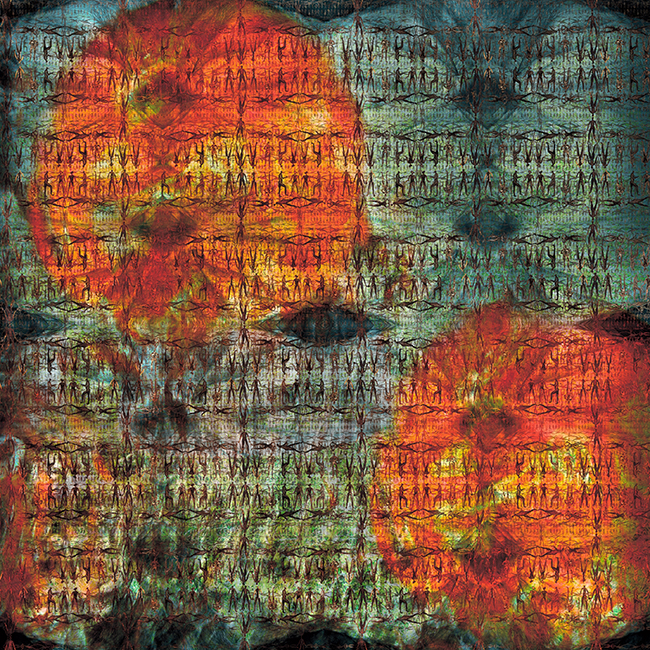
In La Comédie Humaine, the human face becomes a meeting place for personal and historical experience. Tsalamata understands it as bearing the effects of an age: its ambitions, anxieties, conflicts, and wounds. A person’s life develops within circumstances that reach beyond individual choice. Through this relationship, the series considers how social conditions become part of human experience, affecting both inner life and the possibilities of connection with others.
Its literary references bring two perspectives into the inquiry. Honoré de Balzac’s La Comédie Humaine provides the title, while Dante’s Divine Comedy introduces the idea of divine justice. Tsalamata draws these associations into her commentary on the human condition, linking the observation of society with questions of moral responsibility. Past and present enter the same discussion, prompting reflection on the persistence of injustice despite changes in the world’s social, economic, and cultural circumstances.
Her sarcastic approach exposes a system in which those already vulnerable endure greater suffering while corruption gathers strength. The imbalance raises questions about the value assigned to human life when institutional priorities overshadow individual needs. Tsalamata’s criticism addresses the experience of being subject to forces that people cannot easily influence. Within such a setting, dignity becomes difficult to protect, and the relationship between the individual and the larger social order is marked by frustration and uncertainty.
This examination also makes room for loneliness. Tsalamata emphasizes how urgently people need communication, love, and friendship within conditions that can leave them feeling isolated. These relationships occupy an essential place in her account of human existence. The series uses intaglio and mixed media, combining seventeen iron matrices worked with intaglio techniques. Viewed alongside her statement, the resulting impressions can be read as a material counterpart to accumulated experience: marks register upon a surface, recalling the ways encounters and circumstances leave their traces upon a life.
Bird’s Eye
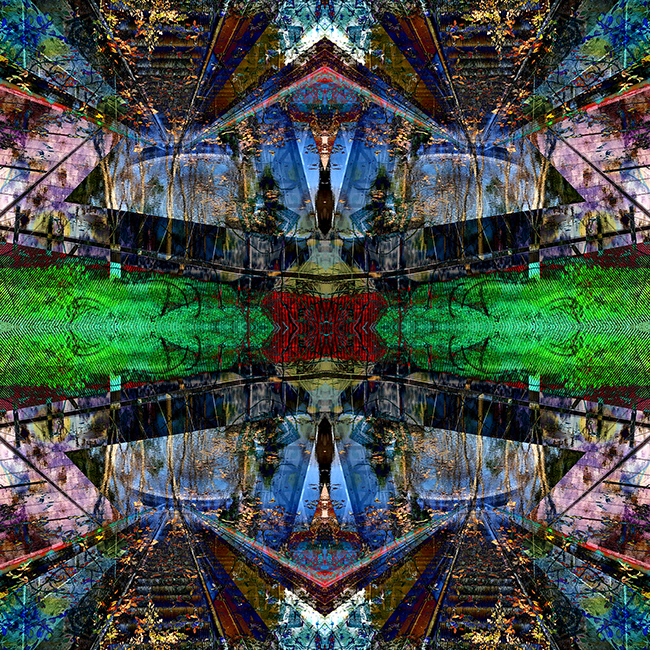
With Bird’s Eye, Tsalamata explores the desire to locate oneself within a world transformed by globalization. Cultural identity becomes an ongoing search involving heritage, self-awareness, and the relationships that shape contemporary existence. As familiar structures shift, people seek a broader understanding of where they belong. The work develops from this need to connect individual experience with a wider cultural context and to recognize a personal position within changing social conditions.
The title proposes a viewpoint from which a larger arrangement becomes visible. Such distance offers an opportunity to reconsider connections that may be difficult to recognize within the immediacy of daily life. Tsalamata extends this idea into an exploration of inner awareness. Her mapping concerns hidden paths, memories, and structures associated with both the individual and collective unconscious. Through this expanded view, the work asks how unseen influences contribute to the understanding of oneself and one’s surroundings.
Contemporary printmaking allows this inquiry to develop through a visual language of multiple layers. Matter and light interact, producing traces and imprints that invite attention beyond immediate appearances. The artist’s reference to a map suggests an effort to reveal underlying relationships within a landscape. Applied to human existence, this approach encourages reflection on the memories and associations beneath the surface of experience. The journey leads inward, toward the search for a stable source of meaning within a fragmented present.
Across the two series, Tsalamata examines what unsettles human life and what might help people understand it. La Comédie Humaine confronts the moral failures and emotional distances embedded in society. Bird’s Eye considers perspective, cultural connection, and self-awareness as ways of finding orientation. Their shared attention to human experience gives printmaking a reflective purpose. Through its traces and layers, Tsalamata invites viewers to consider how history enters their lives, how social circumstances affect their relationships, and where they might find meaning amid continuing change.


